
Most B2B marketing teams are still optimising for a world that’s quietly changed around them.
There’s a shift happening in how people find information online, and most brands haven’t caught up with it yet.
They’re tracking keyword rankings, monitoring click-through rates, A/B testing page titles. All of that still matters. But there’s a question that fewer teams are asking, and it’s becoming one of the more commercially important ones: when a potential client asks ChatGPT about the best providers in your sector, does your brand come up?
For most brands, the honest answer is no. Not because they’re doing anything wrong, but because the factors that get you named in an AI-generated answer are different from the factors that get you ranked on a results page — and most brands haven’t adjusted yet.
This is a practical guide to what actually drives ChatGPT visibility for B2B brands, and what you can do about it.
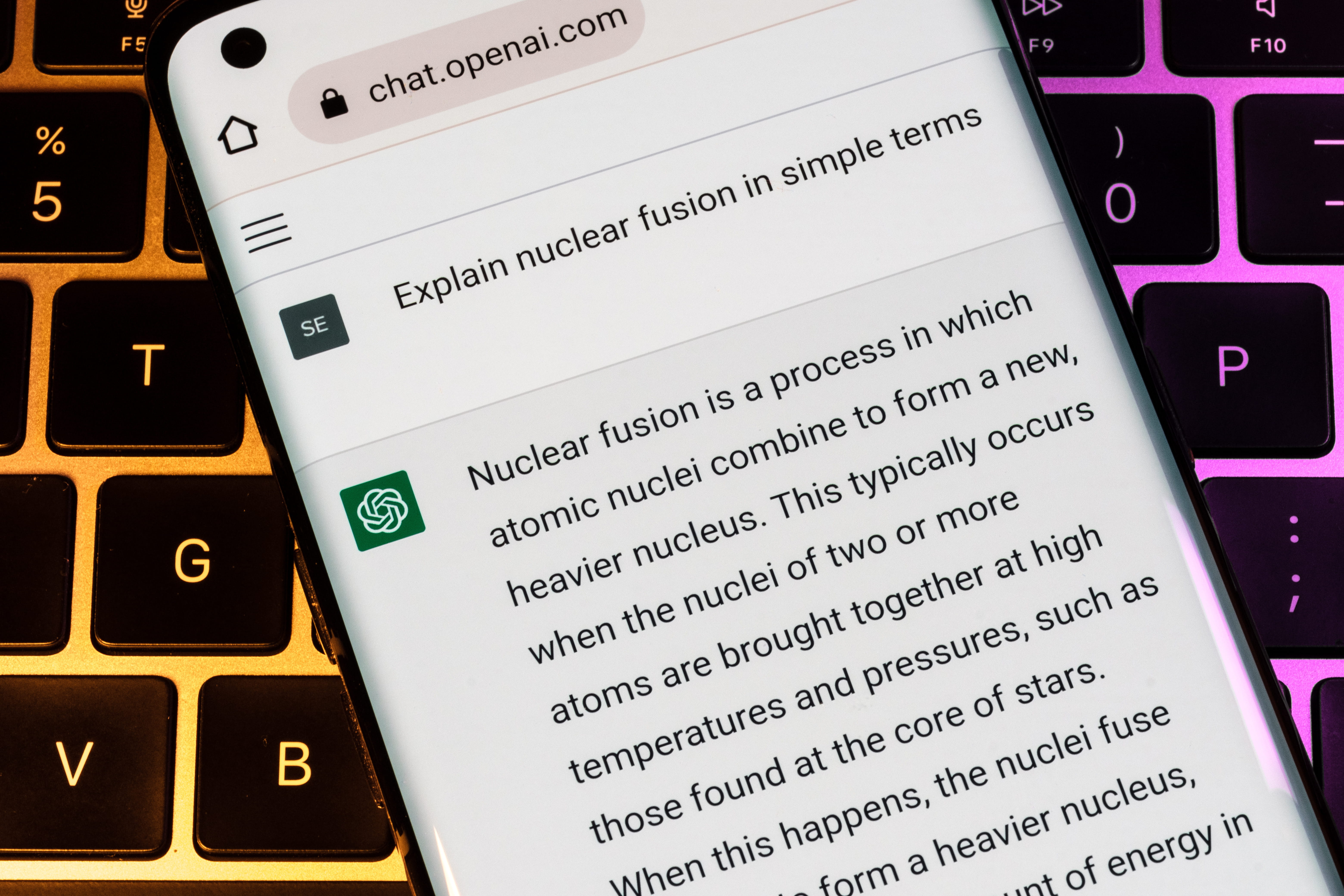
Why ChatGPT names certain brands and not others
ChatGPT doesn’t have a search index. It doesn’t crawl your website in real time and weigh up your domain authority. What it has is a vast amount of learned knowledge about the world, supplemented in some modes by live web access — and within that knowledge, it has formed a view about which brands are credible, established players in which spaces.
The technical term for this is entity recognition. An entity, in this context, is any clearly defined thing — a company, a person, a product, a concept — that appears consistently and coherently across multiple credible sources. When ChatGPT has seen your brand mentioned in trade publications, referenced on credible third-party sites, described in LinkedIn articles, and supported by well-structured information on your own website, it builds a richer and more confident picture of who you are and what you do.
That confidence is what gets you named.
A brand with a beautifully designed website but no external footprint is, to an LLM, a brand it doesn’t know well enough to recommend. A brand with consistent, credible mentions across the web — even with a more modest website — has a much stronger presence in the model’s understanding of the market.
This is the core principle everything else flows from. You are not optimising a page. You are building a reputation that AI systems can recognise.
Schema markup, what it is and why it matters
Schema markup sounds more technical than it is. At its simplest, it’s a piece of structured code added to your website that tells search engines and AI systems exactly what your content means — not just what it says.
Without schema, a page about your leadership team is just text. With schema, it’s a set of named individuals with defined roles, credentials, and connections to an organisation. Without schema, a case study is just a long page. With schema, it’s a structured piece of evidence linking a specific client, a specific outcome, and a specific service.
AI systems — including the ones that power ChatGPT’s browsing and the training pipelines behind it — weight structured, clearly labelled information more heavily than unstructured prose. Schema helps you speak the language these systems understand.
The most useful schema types for B2B brands are Organisation (defining who you are, where you operate, what you do), Person (for your leadership and subject matter experts), FAQPage (for content that answers specific questions), and Article (for blog posts and thought leadership). None of this requires a developer to implement from scratch — most modern CMS platforms support it natively or through a plugin.
It won’t transform your ChatGPT visibility overnight. But it’s part of building the kind of well-structured, clearly defined digital presence that AI systems are more likely to trust.
The platforms that build your entity footprint
Your website is one data point. What surrounds it matters just as much.
LinkedIn is, for B2B brands, probably the single most important third-party platform for AI visibility. Your company page, your leadership team’s individual profiles, the content they publish, the organisations they list — all of this feeds into the picture AI systems build of your brand. A company whose senior team have sparse, rarely updated LinkedIn profiles looks less established than one whose people are visibly active and clearly credentialled.
Crunchbase functions as a credibility signal for company existence and category. It’s a source that AI systems treat as relatively authoritative for company information. If your listing is incomplete, outdated, or missing, that’s a gap worth closing.
Google Business Profile matters more than most B2B brands give it credit for. It confirms your location, your trading status, your category, and your contact details in a format that is highly structured and highly trusted by Google’s own systems — which feed into Gemini and AI Overviews, and indirectly into the broader web corpus that other LLMs are trained on..
Beyond these three, relevant trade directories, industry association memberships, and press coverage in your sector’s key publications all contribute. The goal is a consistent, coherent picture of your brand that appears in multiple places and says the same thing.
The content structure LLMs actually favour
The way most B2B websites are written is not the way AI systems like to read.
Long introductions that circle around a point before making it. Dense paragraphs that mix several ideas together. Headers that describe a topic rather than answer a question. Content written to demonstrate expertise rather than share it.
LLMs extract answers most easily from content that is organised around questions, uses clear and direct language, moves from the main point to the supporting detail rather than the other way around, and uses headers that signal what each section actually contains.
This isn’t a stylistic preference — it reflects how AI systems parse and retrieve information. Content that buries its point is harder to extract. Content that leads with the answer and supports it clearly is far more likely to be used.
The practical implication is worth sitting with: most B2B brands need to rewrite a significant portion of their content, not because it’s badly written, but because it’s written for a different reader than the one that now matters most.
What not to do
Keyword stuffing was already a declining tactic. In the context of AI visibility, it’s actively counterproductive.
LLMs are trained on enormous amounts of human-written text. They have a well-developed sense of what natural language looks like and what forced, over-optimised content looks like. Content that reads as though it was written to rank rather than to inform creates exactly the wrong signal — it suggests a source that is trying to game a system rather than contribute genuinely useful information.
The same applies to thin content published at volume. A hundred shallow blog posts that say the same things in slightly different ways does not build authority. It creates noise that is easy for AI systems to discount.
What works is the opposite: fewer, better pieces of content that take a clear position, demonstrate specific expertise, and are written as though a knowledgeable person sat down to actually answer a question.
That’s a higher bar than most brands are currently meeting. It’s also a significant competitive opportunity for the ones that do.
Where to start
If you’re a B2B brand that wants to understand your current ChatGPT and AI visibility — and what it would take to improve it — the starting point is an honest audit. Ask ChatGPT about the leading providers in your space. Ask it to recommend someone with your specific expertise. See what comes back.
Then ask yourself whether the infrastructure behind your brand — your content, your external presence, your structured data — is doing enough to support the reputation you want AI systems to attribute to you.
If it isn’t, that’s a solvable problem. But it needs to be treated as a strategic one, not a technical fix.
Talk to Fireworx about AI search visibility for your brand
Email: ideas@fwx.co.uk or even better talk to a human on: 01202 559 559